
Ammann Elba Concrete Batching Plants: Premium European Engineering & Operational Review
Technical documentation and evaluation of Ammann Elba’s modular stationary mixing units and high-speed linear containerized plant architectures for global B2B procurement.
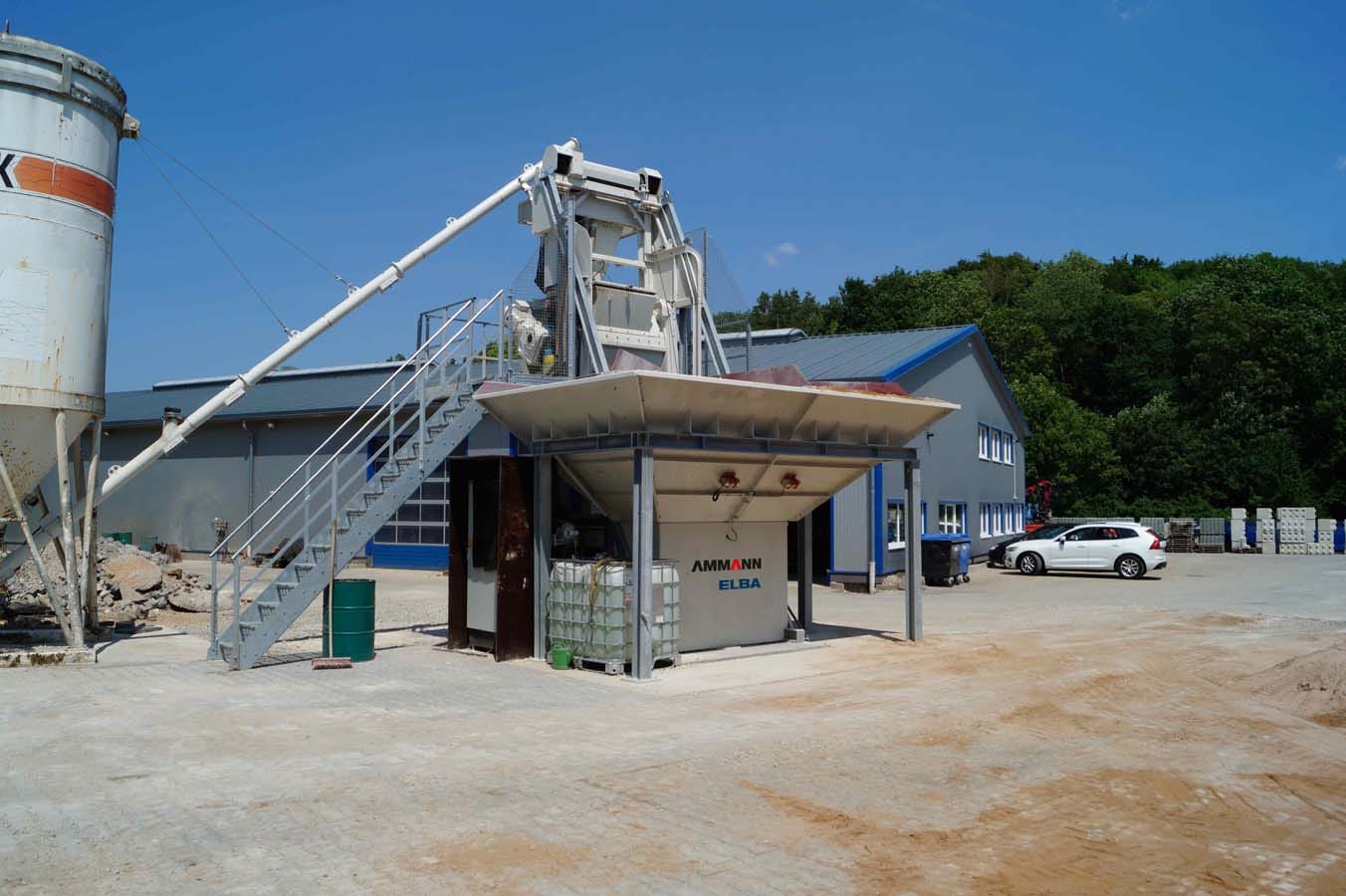
Executive Summary & Market Positioning
The alliance between Ammann Group (headquartered in Langenthal, Switzerland, established in 1869) and Elba (Ettlingen, Germany, a historical pioneer in concrete mixing technology since 1948) represents the pinnacle of premium European industrial engineering. While mid-market exporters capture the bulk of low-to-medium output commercial infrastructure setups, Ammann Elba targets high-end, zero-failure industrial sectors.
Their production footprint—specifically the highly modular CBS Linear Series, Betomix central mix lines, and Elbamix high-mobility configurations—is engineered to meet strict international ready-mix concrete (RMC) recipes, massive high-speed railway (HSR) bridge grids, architectural precast megastructures, and airport runway infrastructure.
This independent procurement review delivers an objective, data-driven analysis of Ammann Elba's proprietary single-shaft and twin-shaft horizontal compulsory mixers, hot-galvanized anti-corrosion metrics, proprietary as1 automation limits, and long-term lifecycle value parameters for international procurement directors.
Mechanical Architecture & Metallurgic Innovation
To justify the high initial capital expenditure (CAPEX) of German-Swiss heavy machinery, structural procurement agents must analyze the raw mechanical tolerances, metallurgic wear limits, and structural protection systems that separate Ammann Elba from regional manufacturing clusters.
1. Mixing System: The Patented Elba Single-Shaft and Twin-Shaft Technology
Ammann Elba standardizes its high-throughput plants on the EMS (Single-Shaft) and EMD (Twin-Shaft) compulsory mixing hosts, which utilize a highly specialized concentric material movement system.
- The Single-Shaft EMS Advantage: Unlike standard pan mixers, Elba’s EMS single-shaft horizontal compulsory technology creates a unique double-conical double-acting material flow. It focuses kinetic energy on intense cross-shear blending, making it highly efficient for processing sticky, low-moisture dry-cast formulas used in high-end precast block yards without generating excessive friction heat.
- Liner Plates & Paddle Composition: The internal wear zones are heavily armored with specialized Elba Wear Protection (EWP) castings. This proprietary chromium-nickel alloy structure exhibits a hardness metric exceeding 63 HRC (Rockwell Hardness Scale). Under intense operational friction from highly abrasive granite or quartz aggregates, this metallurgic profile ensures an extended operational lifespan stretching past 150,000 batches before wear boundaries are reached.
2. Full-Body Structural Galvanization Standards
While standard manufacturers rely on primer sand-blasting and top-coat polyurethane sprays, Ammann Elba offers a premium completely hot-dip galvanized structural steel framework as an engineering baseline for their premium lines.
- Corrosion Resistance Limits: Every structural column, aggregate hopper wall, staircase, and mixing tower segment is completely submerged in molten zinc at 450°C to form a metallurgical bond. This structural optimization ensures complete immunity to rust and chemical degradation for up to 20+ years of continuous deployment, making it the absolute industry baseline for high-salinity marine environments and tropical monsoon zones.
Process Automation, Control Limits & Data Synchronization
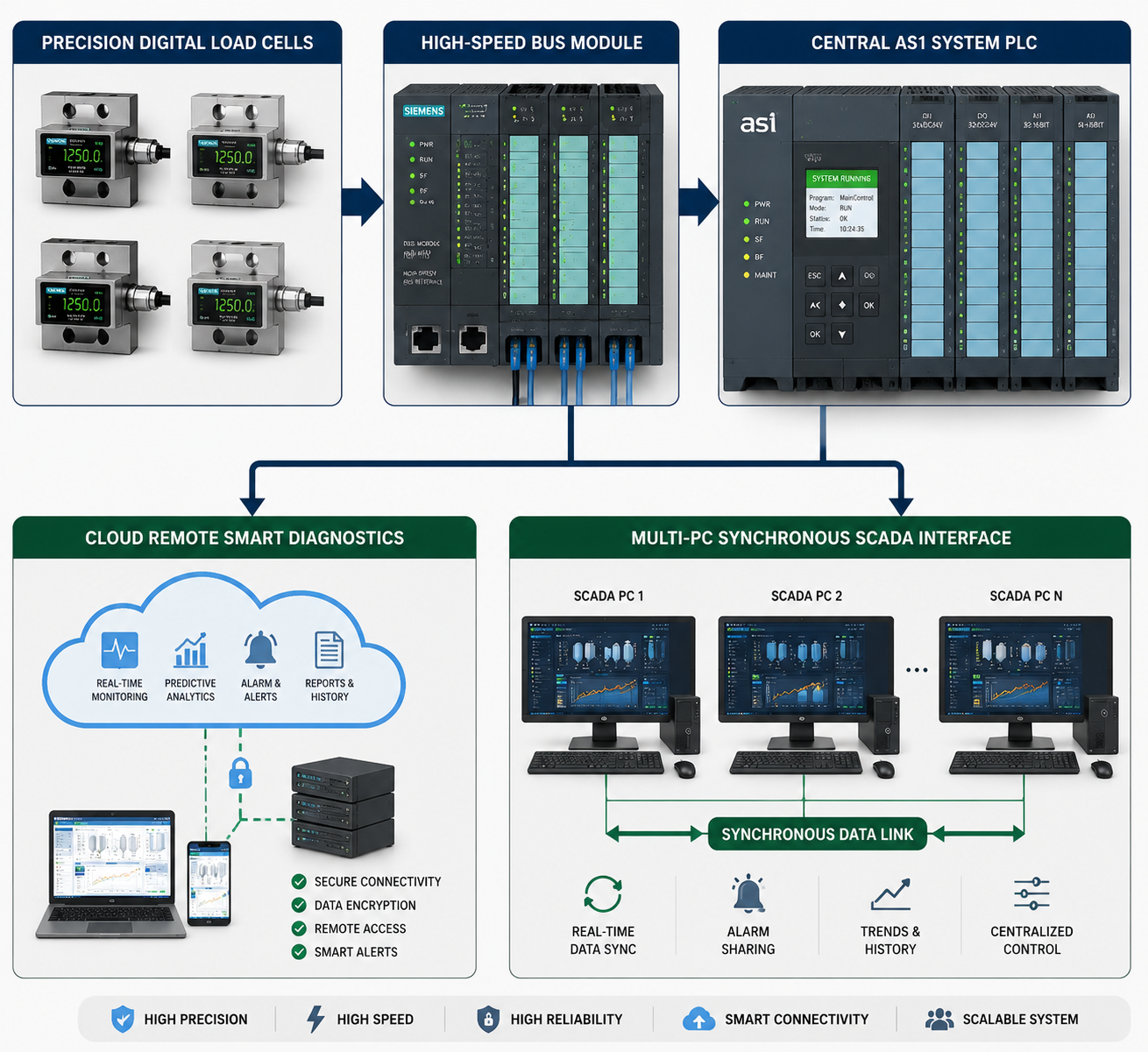
Ammann Elba’s primary operational brain relies on their proprietary as1 Control System Automation Suite synchronized with industrial-grade microprocessors and high-speed telemetry links.
1. The as1 Control Suite & Micro-Weighing Limits
The as1 software platform is an advanced, industrial-grade SCADA environment that monitors every gate position, load cell voltage, and motor load variable at millisecond intervals.
- Strict Material Error Boundaries: Integrated with multi-point stainless steel shear-beam scales, the system achieves a weighing variance margin within ±1% for cement, water, and micro-chemical admixtures, and within ±2% for sand and gravel aggregates. This precision fully satisfies European EN 206 and American ASTM C94 ready-mix production criteria for structural concrete.
- Dynamic Material Flight Auto-Correction: The as1 automation engine tracks the trailing flow of material falling through the air after a discharge gate shuts down. It automatically recalculates the material flight parameters at the start of the next cycle, preventing cumulative weighting drift over multi-shift operations.
2. Intelligent Energy Management & Safety Loops
The control hardware incorporates an intelligent energy management sequence that stages the startup of the massive main mixer motors (e.g., dual 45kW to 90kW setups) to prevent severe voltage drops on the job site's electrical grid. The system also includes automated safety interlocks that physically lock all inspection doors via high-security pneumatic codes if the main drive shafts are spinning.
Technical Specifications & Performance Matrix
The data table below maps the explicit technical engineering boundaries across Ammann Elba’s most frequently sourced international stationary and modular containerized batching plant models.
| Technical Parameter / Metric | Elba CBS 105 L (Modular Linear) | Elba Betomix 2.25 (Stationary Tower) | Elbamix 105 (Mobile Containerized) |
|---|---|---|---|
| Nominal Throughput Capacity | 105 m³/h | 115 m³/h | 105 m³/h |
| Mixer Model / Volumetric Size | EMS 2000 Single-Shaft (2.0 m³) | EMD 2250 Twin-Shaft (2.25 m³) | EMS 2000 Single-Shaft (2.0 m³) |
| Max Allowable Aggregate Size | ≤ 80 mm / 120 mm | ≤ 80 mm / 150 mm | ≤ 80 mm |
| Aggregate Storage Capacity | 4 to 8 bins / up to 320 m³ | Star-Pocket or Inline / 400 m³ | 4 x 20 m³ Integrated Bins |
| Total Electric Motor Power | ~140 kW | ~195 kW | ~130 kW |
| Corrosion Protection Standard | Full Hot-Dip Galvanization | Full Hot-Dip Galvanization | Industrial Primer + Epoxy Topcoat |
| Base Civil Prep Profile | Flat Concrete Foundation Slab | Heavy Reinforced Anchor Grid | Foundationless Frame Design Pad |
Engineering Evaluation Matrix: Pros vs. Cons
To maintain factual independent consulting credibility for global construction procurement managers, Ammann Elba plants must be evaluated via a strict balance of operational realities.
👍 The Engineering Advantages (Pros)
- Flawless Volumetric Efficiency: Due to highly optimized material discharge sequences and aggressive horizontal compulsory cutting forces, these plants consistently hit 96% to 98% of their maximum nominal throughput limits during non-stop 12-hour production runs.
- Unrivaled Lifecycle Asset Value: Thanks to the hot-dip galvanized steel works and high-end EWP liners, an Ammann Elba plant exhibits a physical degradation runway that is 3x longer than generic Asian budget brands, yielding massive resale value in the secondhand heavy machinery market.
- Advanced Modular Flexibility: The CBS Linear and Elbamix series feature pre-wired, quick-connect modular plug assemblies. This layout allows engineering crews to scale up or completely relocate a 105m³/h plant with minimal local cutting or re-welding on site.
👎 The Economic Limitations (Cons)
- Extreme Initial CAPEX Premium: Sourcing an Ammann Elba line requires a massive initial investment premium that sits 60% to 100% higher than standard mid-market Chinese or Turkish manufacturing configurations, requiring a longer short-term cash break-even runway.
- Strict OEM Spare Parts Dependence: Because the patented EMS single-shaft blades and EWP alloy lining sheets rely on precise German casting patterns, replacement wear parts cannot be fabricated by local machine shops and must be ordered directly through Ammann’s European logistics network.
- Complex Automation Learning Curve: The advanced as1 control suite requires specialized operator training. Running this system without an experienced, certified automation technician on site can cause logistical bottlenecks if advanced software errors occur during remote project deployments.
Sourcing & Project Siting Allocation Advice
When finalizing your Ammann Elba procurement purchase order parameters, ensure your engineering team enforces these specific site variables:
- High-Speed Rail and Precast Siting: If your facility is geared heavily toward precast concrete railway sleepers, architectural structural beams, or zero-slump dry blocks, choose the CBS 105 L equipped with the EMS Single-Shaft horizontal host. The cross-shear blending motion ensures complete hydration of chemical silica-fume admixtures without clumping.
- Power Grid Conditioning: The sensitive electronics of the as1 automated control console and the high-torque Nord/Rossi transmission gearboxes are highly intolerant of voltage drops. If your project footprint relies on temporary rental site generators, you must mandate the installation of an inline, heavy-duty Automated Voltage Regulator (AVR) and high-capacity UPS power backup block to protect the PLC memory paths.
- Logistical Lead-Time Planning: Standard Ammann Elba modular configurations carry a factory fabrication lead time of 60 to 90 days, with complex custom configurations exceeding 120 days. Ensure your local construction crew begins pouring and curing the C30 concrete foundation pad arrays at least 30 days prior to the vessel landing at your entry port to guarantee a seamless structural installation sequence.