
Haomei Machinery Concrete Batching Plants: Independent Sourcing & Cost-Effectiveness Review
Executive Summary & Market Positioning
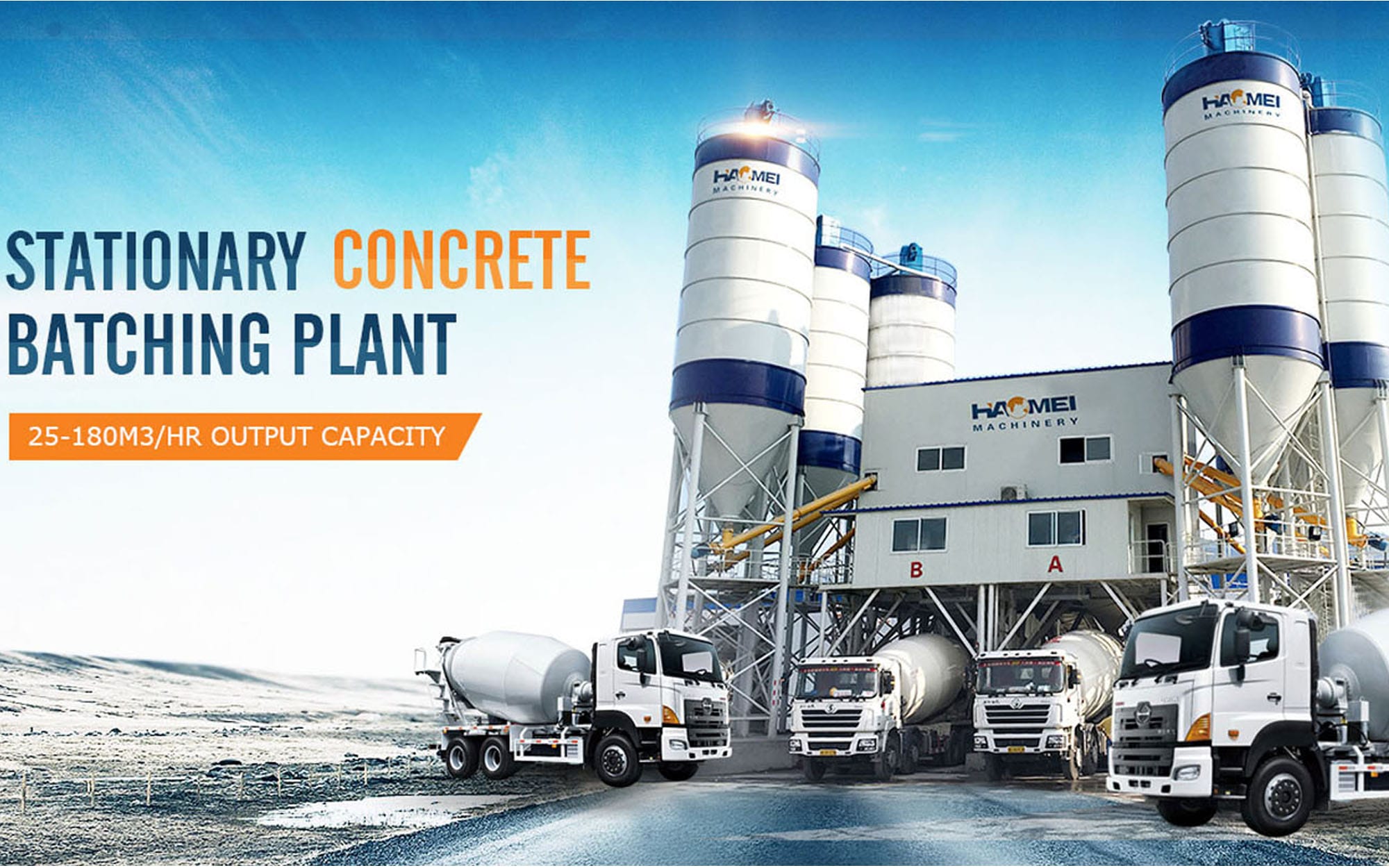
Haomei Machinery Equipment Co., Ltd. (established in 1997 in Zhengzhou, Henan, China) operates as a prominent manufacturer and exporter specializing heavily in intermediate and localized concrete production assets. While tier-1 multi-conglomerates focus heavily on massive dam projects and ultra-high capacity central mix tower architectures, Haomei has strategically captured the global mid-market niche. They focus on high mobility, rapid deployment, and optimized cost-to-performance metrics.
Their export lines—including the widely deployed YHZS series mobile trailer-mounted units and HZS standard skip-hoist stationary configurations—are geared heavily toward small-to-medium enterprise (SME) contractors, localized precast yards, and rental machinery fleets.
This independent technical review delivers structural evaluation data, engineering specifications, automation software limits, and sourcing recommendations for procurement officers tracking projects across Southeast Asia, the Middle East, Africa, and Latin America.
Mechanical Architecture & Component Lineage Analysis
To accurately evaluate a mid-tier plant’s return on investment (ROI), structural procurement agents must analyze where a manufacturer optimizes manufacturing costs versus where they enforce premium engineering standards.
1. The Mixing Assembly: Twin-Shaft JS Series Integration
Haomei standardizes its stationary lines (HZS50 to HZS180) on the JS series horizontal twin-shaft compulsory mixing technology.
- Volumetric Agitation Profile: Haomei utilizes a streamlined, staggered-stacked paddle arrangement on their JS1000 and JS2000 main hosts. This layout forces concurrent radial cutting and axial compression paths, achieving complete batch macro-homogeneity within a fast 16-second active mixing window under optimal aggregate moisture parameters.
- Wear Part Metallurgic Profile: The standard lining setup relies on manganese-chromium alloy configurations. While not matching the extreme Rockwell hardness metrics of premium Cr26 European castings, Haomei's optimized serrated blade profiles reduce vibration fatigue, delivering an operational wear-life boundary of approximately 150,000 to 200,000 tons of material under baseline limestone aggregate loads before overhaul thresholds are triggered.
2. High-Mobility Engineering: YHZS Trailer-Mounted Series
Haomei’s primary engineering strength lies in its YHZS trailerized mobile plant architecture.
- Structural Consolidation: Unlike stationary arrays requiring extensive structural columns, the YHZS line integrates the aggregate batching bin, the twin-shaft mixer host, the water/additive scales, and the pull-out control cabin onto a single unified heavy-duty trailer chassis equipped with trailing axles and a standard kingpin hook.
- Rapid Installation Footprint: The entire structure utilizes a modular, pin-connected layout framework. This eliminates the need for extensive subsurface excavation. A standard YHZS50 unit can transition from road transit configuration to fully operational, calibrated ready-mix concrete production within 48 to 72 hours of on-site delivery.
Process Automation & Electrical Control Architecture
Haomei’s electrical infrastructure balances baseline industrial stability with simplified user interfaces, tailored specifically for project sites lacking dedicated software automation engineers.
1. Weighing Precision & Telemetry Specs
The plant automation loops rely on micro-computerized control networks synchronized with localized high-resolution analog-to-digital (A/D) signal transducers.
- Measurement Error Boundaries: Cement and fluid additives maintain a strict weighing tolerance threshold within ±1% variance. Aggregate weighing channels operate within ±2% tolerances, fully satisfying international ASTM compliance parameters for non-structural and core structural ready-mix placements.
- System Controls Redundancy: The operator desk incorporates a hard-wired manual backup switch layout alongside the primary computerized Windows-based management software. If the central operating PC experiences an OS failure due to extreme dust or ambient site heat, the batch operator can manually override the aggregate doors and fluid discharge butterfly valves via physical buttons to finish the active batch safely.
Technical Performance & Model Parameters Matrix
The technical data matrix below outlines the baseline physical engineering specifications across Haomei’s primary export concrete batching machinery models.
| Mechanical Parameter / Metric | Haomei HZS60 (Stationary) | Haomei HZS120 (Stationary) | Haomei YHZS50 (Mobile Line) |
|---|---|---|---|
| Theoretical Output | 60 m³/h | 120 m³/h | 50 m³/h |
| Mixer Host Model | JS1000 Twin-Shaft | JS2000 Twin-Shaft | JS1000 Compulsory |
| Aggregate Feeding System | Skip Hoist / Bucket | Inclined Belt Conveyor | Integrated Compact Belt |
| Max Aggregate Size | ≤ 60 mm / 80 mm | ≤ 80 mm | ≤ 60 mm |
| Standard Discharge Height | 3.8 Meters | 4.1 Meters | 3.8 Meters |
| Total Structural Mass | ~22 Tons (Heavy Build) | ~48 Tons (Heavy Build) | ~16 Tons (Chassis Base) |
| Compliance Certifications | CE Marked / ISO 9001 | CE Marked / ISO 9001 | CE Marked / ISO 9001 |
Sourcing Evaluation Matrix: Pros vs. Cons
To maintain factual consulting credibility for international infrastructure buyers, Haomei plants must be evaluated via an objective balance of economic and mechanical parameters.
👍 The Sourcing Advantages (Pros)
- Extreme Capital Cost-Effectiveness: Haomei plants require an initial capital expenditure (CAPEX) that is 30% to 50% lower than elite German or top-tier Chinese mega-brands, significantly accelerating the project's financial break-even runway.
- Optimized Container Logistics: The structural frames, mixing towers, and modular cement silos are designed explicitly to match standard 40ft HQ shipping container dimensions. This structural optimization limits ocean freight overhead during trans-pacific or global transit.
- Simplified Operational Learning Curve: The software layout features a highly intuitive, multilingual interface. It requires minimal advanced programming background for field operators, making it ideal for remote project deployments.
👎 The Mechanical Limitations (Cons)
- Lower Initial Sheet Mass: The overall structural skeleton and tower plate thickness profiles are leaner compared to heavy-duty premium tier-1 plants, requiring strict adherence to operational vibration dampening protocols.
- Intermediate Structural Customization Limits: Unlike high-end engineering houses that custom-design complex, irregular site layouts, Haomei relies heavily on standardized, fast-turnaround assembly line configurations.
- Manual Grease System Management: Standard base configurations utilize a manual or semi-automated lubrication delivery system for shaft end-seals, requiring rigid operator discipline to ensure manual grease pumps are cycled every single shift to prevent seal blowouts.
Procurement & Site Siting Recommendations
- Chassis Maintenance on Mobile Assets: When deploying the YHZS50 mobile line, do not allow the plant's weight to sit continuously on the rubber pneumatic transit tires during long production runs. Deploy the integrated heavy-duty mechanical outriggers onto cured C25 concrete block foundations to stabilize the weighing scales from ground vibrations.
- Silo Sizing Strategy: Because Haomei plants are highly cost-effective, maximize your budget headroom by upgrading from standard 50-ton silos to dual 100-ton bolted cement silos. Bolted silos pack flat inside standard open-top shipping containers and provide an asset buffer against unpredictable localized bulk cement shipping logistics.
- Mandatory Air-Filter Management: Due to the simple open-air configuration of standard mid-market aggregate hoppers, sand dust migration into the primary pneumatic line loops is common. Sourcing agents must verify that an automatic oil-mist injector and filtration unit are inline with the main pneumatic assembly to prevent premature solenoid wear.