
Concrete Batching Plant Capital Investment Cost & ROI Analysis for 2026 Projects
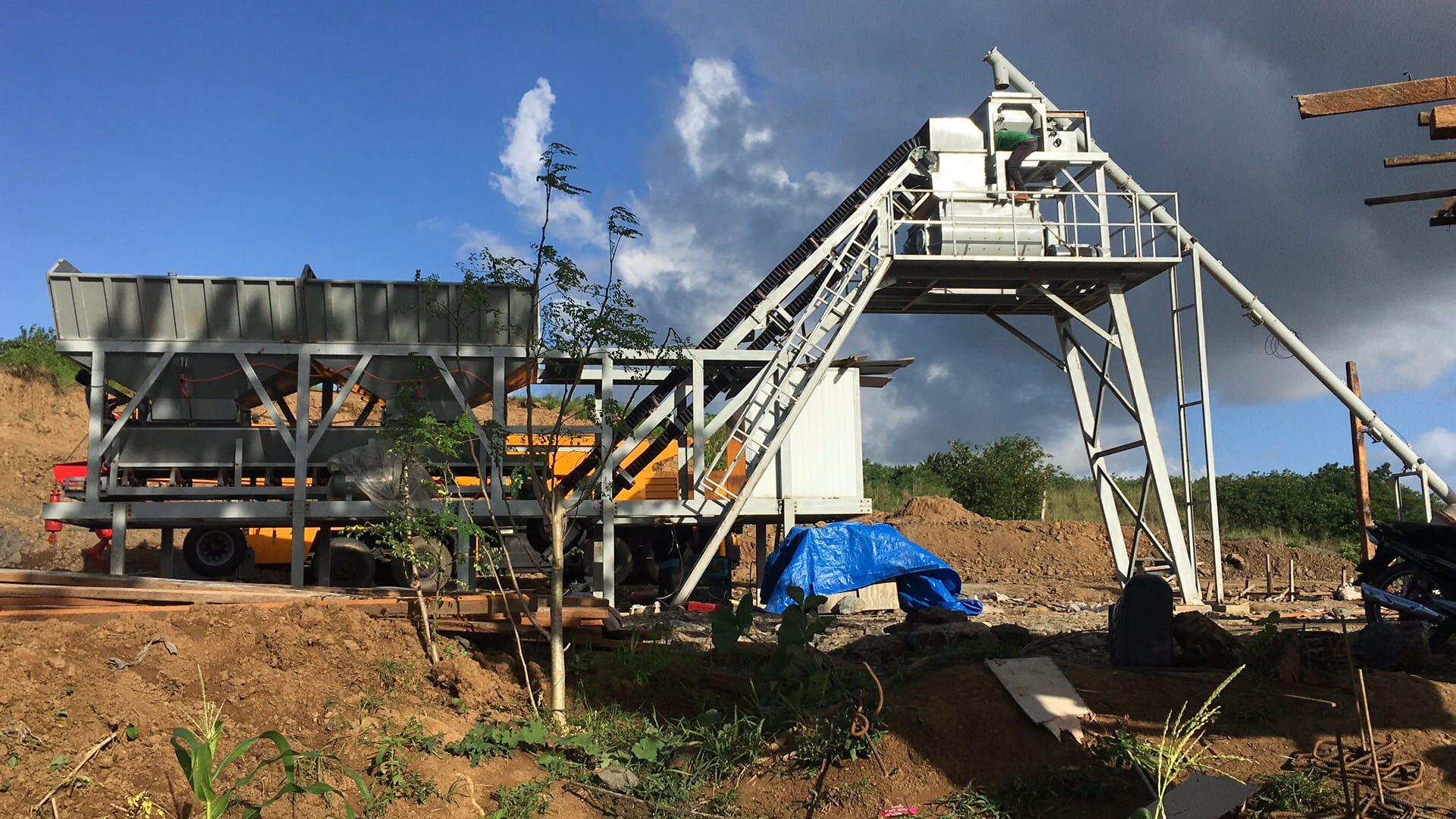
Strategic Capital Allocation Framework
Deploying a commercial ready-mix concrete (RMC) production facility or a dedicated project-specific mixing node requires a rigorous, data-driven evaluation of initial capital expenditure (CAPEX) relative to multi-year operating expenses (OPEX). A systemic point of failure among newly established construction firms is the localized "sticker shock" cycle. Investors routinely budget exclusively for the core mixing tower assets while entirely neglecting the high-liability outlays associated with underground civil works, structural soil stabilization, electrical grid substations, and cross-border logistical freight loops.
In 2026, global supply chain realignments and strict multi-national carbon-emission compliance mandates (such as environmental dust-encapsulation laws) have restructured the baseline entry costs for heavy machinery setups.
This financial blueprint isolates the precise asset allocations required to commission standard high-demand nodes—specifically contrasting the HZS60 (60 m³/h Skip-Hoist) and HZS120 (120 m³/h Inclined-Belt) stationary configurations—and maps the quantitative payback variables needed to calculate real-world return on investment (ROI).
Granular Sourcing Budget: HZS60 vs. HZS120 Siting Models
To secure a highly stable cash runway, capital modeling must account for three distinct investment rings: core industrial machinery, local civil engineering infrastructure, and auxiliary material handling fleets. The pricing parameters below reflect current 2026 market benchmarks for certified, premium tier-1 manufacturing components cleared at international gateway loading docks.
1. Primary Plant Machinery Assets (FOB Gateway Ports)
- HZS60 Stationary Configuration: Engineered with a 1.0 m³ horizontal compulsory twin-shaft mixer, a 3-compartment aggregate batching unit with independent scale hoppers, automated Siemens/Omron PLC cabinets, and twin 100-ton bolted cement silos. The baseline capital requirement floats between $48,000 to $68,000 USD.
- HZS120 Stationary Configuration: Deployed with a heavy-duty 2.0 m³ twin-shaft host, a 4-compartment aggregate batcher running high-speed A/D signal modules, a dual-PC synchronous SCADA operator desk, automated high-pressure wash loops, and triple 150-ton bolted cement silos. The baseline investment spans $115,000 to $165,000 USD.
2. Civil Foundation and Structural Site Engineering
Subsurface civil works are completely non-recoverable assets. For an HZS60 setup, executing the excavation, pouring the C30-reinforced concrete anchor pads, building aggregate layout retaining walls, and cutting dirty water sediment basins demands a budget of $14,000 to $20,000 USD.
For the high-vibration, belt-fed HZS120 line, the heavy rebar structural footing footprint drives civil construction costs up to $28,000 to $45,000 USD.
3. Auxiliary Material Fleets (Material Logistics)
A mixing tower cannot function in isolation. The plant footprint requires support machinery to manage aggregate stockpiles and move cured slurry:
- Wheel Loader (3-to-5 Ton Capacity): Mandatory for pushing sand and gravel into the batching hopper ($28,000 – $52,000 USD used/new tier-1).
- Transit Mixer Trucks (10 m³ to 12 m³ capacity): Deploying a core starter fleet of 3 heavy-duty transit mixer units requires an additional capital allocation of $95,000 to $150,000 USD.
2026 Global Capital Sourcing Allocation Matrix
The industrial data table below maps the strict financial percentage distributions required to transition a raw piece of industrial land into an active, certified commercial RMC operating center.
| Capital Expenditure Segment | HZS60 Skip-Hoist Line | HZS120 Inclined-Belt Line | Risk Level & Asset Mitigation |
|---|---|---|---|
| Core Compulsory Mixing Tower | 34% of Total Capital | 38% of Total Capital | Low Risk / Protected by Factory Warranty |
| Civil Infrastructure & Pads | 11% of Total Capital | 10% of Total Capital | High Risk / Non-Recoverable Local Loss |
| Ocean Freight & Customs Import | 9% of Total Capital | 11% of Total Capital | Variable / Logistics Corridor Dependent |
| Transformer & Local Utilities | 6% of Total Capital | 5% of Total Capital | Fixed Outlay / Critical Infrastructure |
| Auxiliary Sourcing Fleet | 30% of Total Capital | 28% of Total Capital | Liquid Asset / Subject to High Daily OPEX |
| Working Cash Reserves | 10% of Total Capital | 8% of Total Capital | Essential Fluid Runway for Cement Slurry |
Quantitative ROI Modeling & Payback Trajectory
To evaluate project visibility for institutional lenders or private factory owners, corporate procurement managers utilize a strict volumetric operating profit model to verify the exact calendar timeline required to hit full capital amortization.
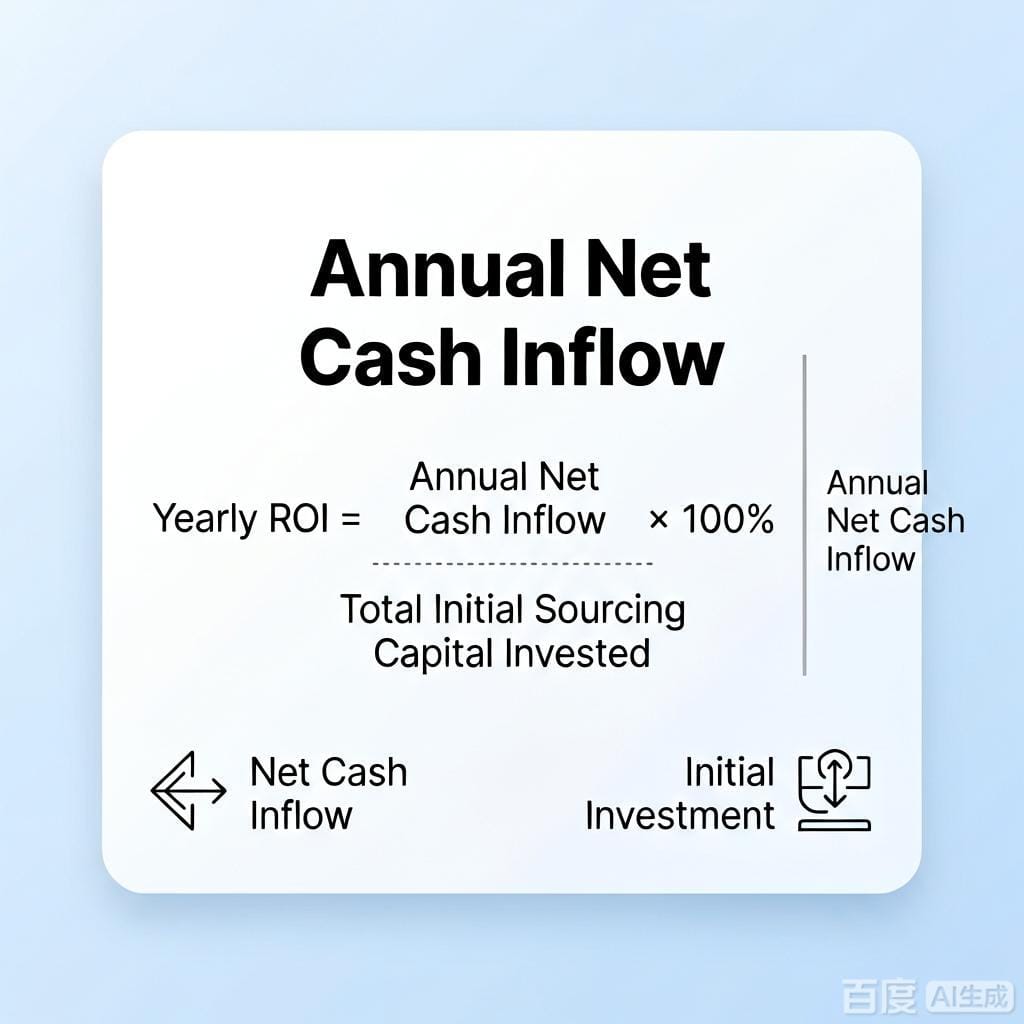
Where Annual Net Cash Inflow is formulated via:
$$\text{Annual Net Cash Inflow} = \text{Annual Production Output (m}^3\text{)} \times \text{Net Operating Margin Per Unit ($/m}^3\text{)}$$
Real-World Operating Projection: Sourcing an HZS60 Station
- Target Staging Zone: Fast-growing infrastructure corridor (e.g., Southeast Asia or Middle East coastal projects).
- Average Market Selling Price of RMC: $78.00 USD per m³.
- Raw Material Sourcing + Labor OPEX (Cement, Sand, Admixtures, Water, Diesel): $64.50 USD per m³.
- Net Operating Profit Margin: $13.50 USD per m³.
- Plant Utilization Factor: Running at a conservative 50% capacity factor over a standard 10-hour shift yields a daily output of 300 m³.
- Annual Volume Sizing (260 Working Days): $300 \text{ m}^3 \times 260 = 78,000 \text{ m}^3 \text{ per annum}$.
- Total Annual Cash Inflow: $78,000 \text{ m}^3 \times $13.50 \text{ USD} = \mathbf{$1,053,000 \text{ USD}}$.
Under this highly realistic financial profiling, an initial total project execution investment of $195,000 USD (encompassing core machinery, sea containers freight, local civil pad construction, and a used loader) completely recovers its entire capital layout within 4.5 to 5.8 months of live commissioning.
Procurement Risk Mitigation Directives
To secure these high-density payback margins and insulate your capital from site-level disruption, your sourcing sheets must enforce three specific operational directives during the final factory purchase contract negotiation:
- Component Lineage Lock-In: Mandate that all critical electronic, hydraulic, and pneumatic modules utilize globally distributed component lineages. Explicitly specify Siemens PLC processors, Schneider Electric breakers, AirTAC pneumatic cylinders, and WAM silo dust collectors. This guarantees your site electricians can source wear parts from local industrial supply stores, eliminating downtime waiting for air-freight custom clearances from China.
- Environmental Cladding Readiness: Many metropolitan zones now enforce zero-emission industrial zones. Ensure your factory contract includes pre-engineered structural pre-holes on the mixing tower channel frames. This allows the rapid addition of corrugated steel sheet cladding and centralized baghouse dust extraction systems later without requiring structural on-site torch cutting or re-welding.
- Advanced Mixer Drive Redundancy: For the HZS120 belt conveyor setup, specify a dual-motor, dual-reducer synchronous drive architecture for the twin-shaft mixer host. If motor A experiences an electrical grounding short-circuit mid-pour, the PLC software loop automatically isolates the failed motor, allowing motor B to operate at 50% capacity to safely discharge the live concrete mix before it hydrates and destroys the internal mixing drum assembly.
Conclusion: Strategic Capital Takeaways
Navigating the financial deployment of a concrete batching plant in 2026 demands a shift from evaluating short-term procurement costs to analyzing long-term structural asset lifecycles. Minimizing initial machinery capital expenditure (CAPEX) by sourcing unbranded equipment lines frequently introduces severe operating expenditure (OPEX) penalties via dynamic scale drift, premature gear transmission failures, and extensive project site downtime.
To maximize capital efficiency and secure a sub-6-month payback trajectory, engineering procurement teams must prioritize core component lineage standardization, fully automated robotic structural builds, and rigid subgrade civil foundation execution. Insulating your heavy equipment asset from environmental and local utility volatility remains the absolute cornerstone of running a high-yield, zero-failure ready-mix infrastructure operation.
Frequently Asked Questions (FAQ)
Q1: What is the average initial capital investment cost for an HZS60 vs. HZS120 concrete batching plant?
A1: In 2026, the FOB factory capital investment cost for a standard stationary HZS60 skip-hoist concrete plant ranges between $48,000 to $68,000 USD. Conversely, a heavy-duty, belt-fed HZS120 concrete batching line demands a machinery asset allocation spanning $115,000 to $165,000 USD. These baseline parameters exclude cross-border ocean freight, localized civil engineering foundation outlays, and auxiliary material handling equipment.
Q2: How much budget should be allocated for civil foundation engineering and site preparation?
A2: Subsurface civil works require an unrecoverable capital outlay of $14,000 to $20,000 USD for an HZS60 plant footprint. For the high-vibration, high-throughput HZS120 system, the reinforced C30/C35 structural concrete footing grid raises the civil engineering budget to $28,000 to $45,000 USD. Siting locations on soft or coastal soil geographics will introduce extra costs due to mandatory deep concrete pile driving procedures.
Q3: What is the typical return on investment (ROI) payback timeline for a commercial ready-mix concrete (RMC) plant?
A3: Under standard market utilization factors—operating at a conservative 50% capacity factor over a 10-hour shift (yielding roughly 300 m³ per day)—an HZS60 plant running in a high-growth infrastructure zone typically achieves a full capital break-even and investment amortization threshold within 4.5 to 6 months of live site commissioning.
Q4: Why is component lineage standardization critical during the heavy machinery procurement phase?
A4: Specifying global component lineages (such as Siemens PLC processors, Schneider Electric breakers, and AirTAC pneumatic loops) ensures that your site mechanics can procure critical replacement wear parts from local industrial supply houses. This eliminates catastrophic operational bottlenecks and shipping custom clearance delays associated with ordering proprietary spare parts from overseas factory depots.
Q5: How do eco-friendly environmental regulations impact the 2026 plant setup budget?
A5: Modern metropolitan zones heavily enforce zero-emission industrial zones. Sourcing agents must ensure the mixing tower channel frames feature pre-engineered structural pre-holes. This allows for the rapid, cost-effective installation of corrugated steel sheet cladding and centralized baghouse dust extraction systems later, avoiding expensive structural on-site torch cutting or field re-welding.
Primary Keywords:concrete batching plant capital investment cost,ready-mix concrete plant ROI analysis,civil foundation engineering budget 2026,heavy machinery procurement guidelines,component lineage standardization
Request Technical Blueprints & Factory Quotes
Submit your machinery parameters below. Connect directly with verified, certified heavy industrial manufacturers to receive custom foundation drawings, layout schematics, and direct-from-factory pricing.