
Why Is My Concrete Mixer Overheating?
Learn the common causes of concrete mixer overheating, troubleshooting methods, maintenance procedures, and preventive solutions.
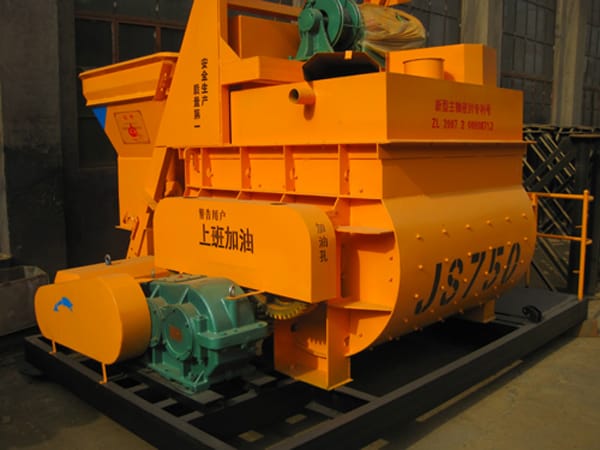
Industrial concrete mixers operate under severe mechanical, tribological, and electrical stresses. When an industrial mixer experiences thermal overload, identifying the root cause requires a systematic engineering approach.
This guide provides a comprehensive troubleshooting framework for plant operators and mechanical engineers to diagnose and resolve overheating issues in high-capacity concrete batching plants.
1. Mechanical and Tribological Factors
Main Drive Gearbox Friction
The primary reduction gearbox converts high-speed motor rotation into high-torque mixing vectors. Excessive heat generation within the gearbox housing typically points to oil starvation, viscous shear, or mechanical misalignment.
- Lubricant Viscosity and Volumetric Levels: Operating with an incorrect oil viscosity or a depleted lubricant volume drastically increases boundary friction between the gear teeth. Conversely, overfilling the gearbox leads to oil churning, which elevates operating temperatures due to internal fluid friction.
- Bearing Preload and Misalignment: Micro-misalignments between the input shaft and the main planetary or twin-shaft gear train introduce asymmetric radial and axial forces. This causes localized heat spikes exceeding 85°C at the bearing races.
Mixing Tool Drag and Concrete Buildup
The physical interaction between the mixing vectors and the concrete matrix directly governs mechanical resistance.
- Blade-to-Liner Clearance: The design tolerance between the mixing paddles and the drum liners must be strictly maintained between 3 mm and 5 mm. If paddles wear down or shift, aggregate wedging occurs, significantly increasing the mechanical drag coefficient.
- Hardened Material Accumulation: Residual concrete buildup on the central shafts, mixing arms, and paddle faces disrupts the optimized fluid dynamics of the mixing vector. This accumulation increases the effective rotating mass and forces the drive system to exert higher torque, translating into thermal energy.
Main Shaft Seal Failure
High-performance mixers utilize complex multi-stage mechanical seals or packing glands purged with pressurized grease to isolate the mixing chamber from the main support bearings.
- Contamination Ingress: If the pneumatic or hydraulic grease purging loop drops below the internal chamber pressure (typically requiring a baseline pressure of 2.0 bar to 3.5 bar), abrasive cement slurry penetrates the seal assembly.
- Frictional Scoring: Abrasive particles scoring the shaft sleeve create intense localized friction, rapidly overheating the main bearing housings and risking catastrophic shaft seizure.
2. Electrical Motor Dynamics and Power Quality
Phase Overcurrent and Voltage Fluctuation
Electric motors driving planetary or twin-shaft mixing vectors are engineered to operate within specific voltage and current tolerances.
- Voltage Drop (Under-voltage): If the incoming line voltage drops by more than 5% of the nominal rating (e.g., dropping below 380V or 460V depending on regional grids), the motor must draw higher amperage to maintain the required mechanical kilowatt output. This overcurrent condition exponentially accelerates copper losses within the stator windings, causing rapid thermal buildup.
- Phase Unbalance: Voltage unbalances exceeding 1% between phases generate negative-sequence magnetic fields within the stator. This creates opposing braking torques, leading to severe localized heating that standard thermal overload relays may not immediately detect.
Variable Frequency Drive (VFD) Misconfiguration
Modern batching plants utilize Variable Frequency Drives (VFDs) to ramp torque and modulate mixing speeds (20 Hz to 60 Hz).
- Carrier Frequency Settings: An excessively high VFD carrier frequency increases switching losses within the drive's IGBT modules and induces high-frequency harmonic currents in the motor windings, elevating operating temperatures.
- Low-Speed High-Torque Operation: Running the mixer at low frequencies (under 25 Hz) for extended durations during specialized mixing cycles reduces the effectiveness of the motor's shaft-mounted cooling fan. Without adequate forced ventilation, the motor cannot dissipate the heat generated by high-torque demands.
3. Operational Load and Rheological Profiles
Volumetric Overloading
Concrete mixers are rated for precise geometric and compacted output capacities (e.g., 1.5 m³, 3.0 m³, or 4.5 m³ per batch).
- Exceeding Maximum Batch Volume: Overcharging the mixer beyond its rated volumetric limit causes the concrete matrix to spill over the central shafts of twin-shaft mixers or submerge the planetary gear carriers. This alters the intended fluid mechanics and forces the motor to operate continuously in its electrical service factor range, triggering thermal overload sensors.
Mix Design and Rheological Variance
The physical properties of the concrete recipe directly dictate the energy required to shear the material.
- Low Water-to-Cement (W/C) Ratios: High-performance or ultra-high-performance concrete (UHPC) mixes featuring low W/C ratios (under 0.30) exhibit exceptionally high plastic viscosities and yield stresses.
- Admixture Sequencing: Delays in the injection of superplasticizers via the fluid distribution manifold force the mixer to process a dry, highly resistive aggregate-cement matrix during the initial 15 to 30 seconds of the cycle, causing severe transient torque spikes and thermal accumulation.
4. Engineering Matrix: Troubleshooting Diagnostic Protocols
| Diagnostic Step | Target Component | Engineering Metric / Threshold | Corrective Action Protocol |
|---|---|---|---|
| 01. Thermal Imaging | Reduction Gearbox & Main Bearings | Maximum T differential under 40°C over ambient; absolute limit 85°C | Flush and replace lubricant; check axial alignment using laser tools. |
| 02. Clearance Audit | Mixing Paddles to Outer Wall Liners | Optimum gap: 3 mm to 5 mm | Adjust or replace worn paddle faces; torque locking bolts to specified N·m. |
| 03. Current Analysis | Stator Windings (Phase L1, L2, L3) | Amperage balance within 2%; maximum continuous current under nominal current | Balance line voltage; inspect VFD parameter maps for harmonic distortion. |
| 04. Pneumatic Verification | Automatic Lubrication Purge Loop | Continuous pressure: 3.0 bar to 5.0 bar (300 kPa to 500 kPa) | Purge air pockets from lines; verify integrity of discharge butterfly valves. |
| 05. Rheological Check | Aggregate Scales & Water Dosing | Slump consistency variation under 20 mm | Recalibrate load cells; adjust water-to-cement ratio based on aggregate moisture. |
5. Preventative Operation and Maintenance Framework
To ensure maximum equipment uptime and prevent thermal failure modes, plant engineers must enforce a strict, data-driven preventative maintenance schedule.
Daily Verification Routines
- Mechanical Integrity: Inspect the internal mixing chamber before startup. Ensure no foreign bodies are wedged in the paddle mechanisms.
- Pneumatic Loops: Verify that the automated grease pump maintains a baseline pressure of at least 3.0 bar during the entire batching sequence to protect the main shaft seals.
- Discharge Integrity: Clean the discharge butterfly valves and hydraulic gate seals to prevent concrete leakage, which can alter the mix volume and consistency of subsequent batches.
Weekly and Monthly Overhauls
- Lubrication Analysis: Draw oil samples from the main reduction gearbox to check for iron particulate contamination, which indicates gear face pitting or bearing wear.
- Electrical Enclosure Audit: Use compressed air to clean VFD cooling fins and motor cowlings. Ensure cooling fans operate without obstruction.
- Load Cell Calibration: Periodically calibrate the aggregate scales and water dosing systems to eliminate hidden overloading risks caused by drifting sensor weight baselines.
Frequently Asked Questions
What temperature is considered overheating?
Most industrial mixer motors should operate below 90°C.
How often should bearings be lubricated?
Typically every 250–500 operating hours.
Can overheating damage the gearbox?
Yes. Prolonged overheating can damage seals, gears, and bearings.
What lubricant is recommended?
Always use the lubricant grade specified by the manufacturer.
Can overload protection prevent overheating?
Yes. Proper overload protection reduces the risk of motor failure.
Conclusion
Concrete mixer overheating is usually the result of lubrication deficiencies, bearing problems, gearbox friction, electrical overload, improper VFD settings, or excessive production loads. Because thermal issues often originate from multiple interacting factors, successful troubleshooting requires a structured diagnostic process.
By routinely monitoring gearbox temperatures, motor current, lubrication pressure, mixing clearances, and batching consistency, plant operators can identify developing problems before major failures occur.
A proactive maintenance strategy not only prevents overheating but also improves mixing efficiency, reduces downtime, extends component life, and maximizes the overall productivity of the concrete batching plant.
Related Equipment
- Concrete Batching Plants
- Twin Shaft Mixers
- Planetary Mixers
- Aggregate Conveyors
- Cement Silos
Primary Keywords: Concrete Mixer Overheating, Concrete Mixer Maintenance, Twin Shaft Mixer Troubleshooting, Gearbox Overheating, Motor Overload, Concrete Batching Plant Maintenance, Industrial Mixer Diagnostics.
Request Technical Blueprints & Factory Quotes
Submit your machinery parameters below. Connect directly with verified, certified heavy industrial manufacturers to receive custom foundation drawings, layout schematics, and direct-from-factory pricing.