
Planetary vs Twin-Shaft Concrete Mixers: Which Fits Your Precast or Ready-Mix Factory?
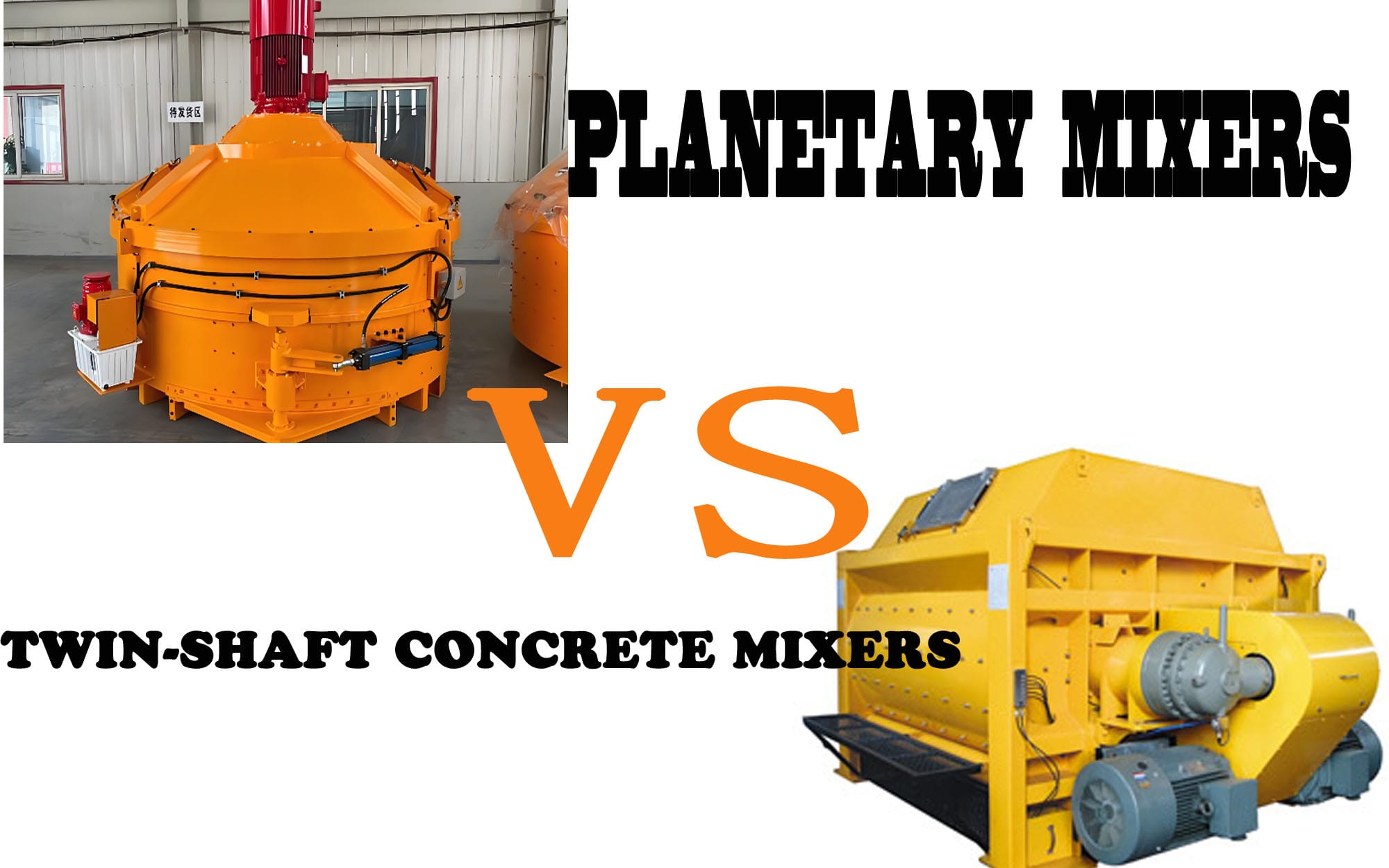
Industrial Concrete Mixing Dynamics Overview
Selecting the optimal compulsory mixing mechanism dictates the final structural strength, hydration consistency, and overall operational efficiency of a concrete production line. While older tilt-drum technologies have been entirely phased out of mainstream industrial construction, modern batching systems rely heavily on two dominant compulsory kinetic designs: Planetary (Counter-Current) Mixers and Twin-Shaft Horizontal Compulsory Mixers.
Procurement directors and factory owners frequently make the mistake of treating these mixing mechanisms as interchangeable. In reality, their internal fluid dynamics, shear forces, aggregate size tolerances, and maintenance wear vectors are fundamentally different.
This engineering evaluation delivers a data-driven cross-comparison of both mixing technologies to help plant operators match the correct mixing vector to their specific application—whether running a high-volume commercial ready-mix concrete (RMC) hub or a specialized architectural precast component facility.
Fluid Dynamics & Mixing Mechanisms Compared
The primary engineering divider between planetary and twin-shaft architectures is how kinetic energy is transferred into the aggregate, cement, and water slurry matrix.
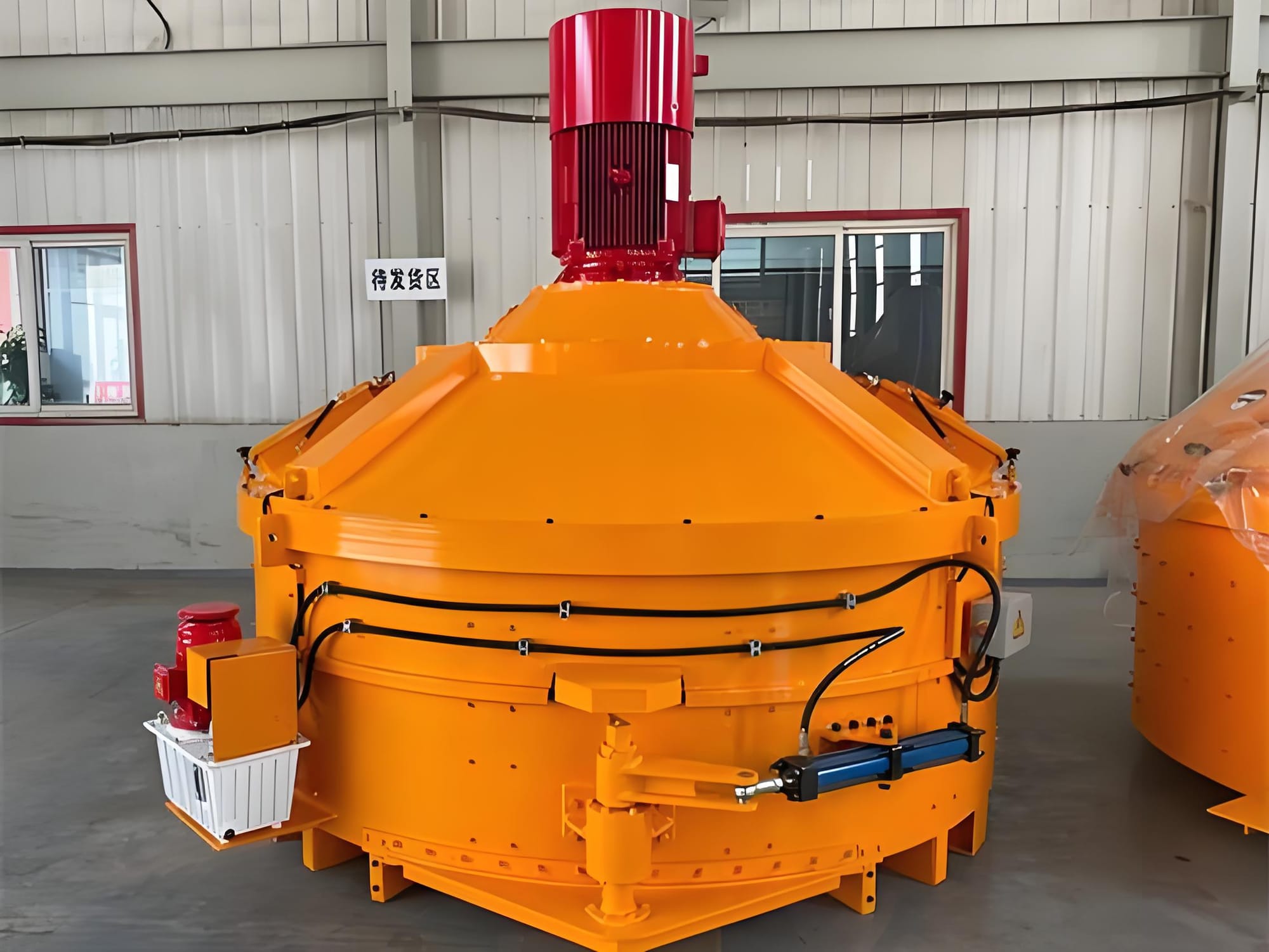
1. Planetary (Counter-Current) Mixer Kinetics
Planetary mixers feature a vertical main drive shaft connected to one or more star-shaped mixing stars that rotate on a central sun-gear axis while simultaneously spinning around their own independent axes.
- Mixing Trajectory: This counter-current planetary action creates highly complex, intersecting structural paths. Every particle of material is lifted, dropped, and sheared multiple times per second without relying on gravity alone.
- Homogeneity Index: Planetary mixers excel at wet or dry ultra-high homogeneity mixing. They distribute micro-admixtures, pigment powders, and synthetic or steel fibers perfectly throughout the batch without causing material clumping or hot spots.
- Energy Efficiency: Because the paddles cover 100% of the pan floor area within a single geometric revolution, the mixing cycle is rapid, reducing energy waste during extended cycles.
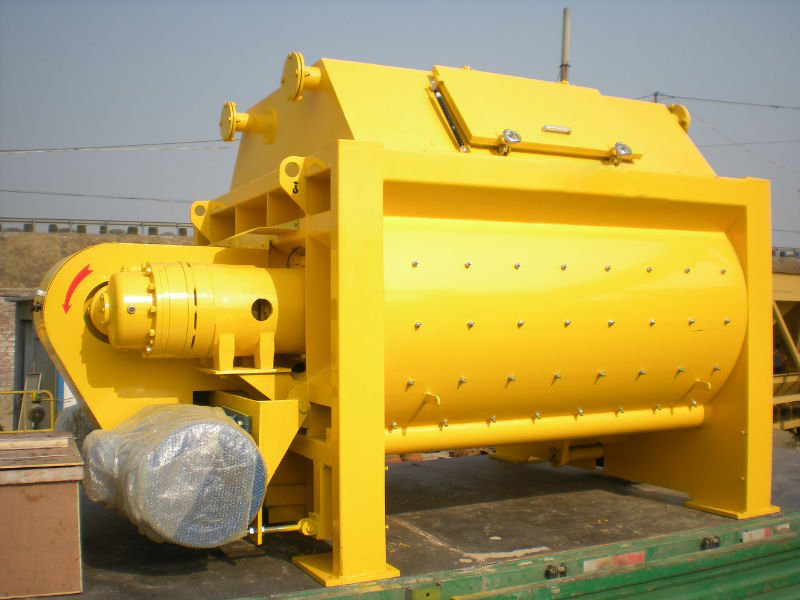
2. Twin-Shaft Horizontal Mixer Kinetics
Twin-shaft mixers utilize two horizontal main shafts outfitted with synchronized, counter-rotating mixing arms and paddles arranged in a specialized helical spiral pattern.
- Mixing Trajectory: The overlapping circular paths of the twin-shaft layout throw material into a high-intensity central fluidization zone. Material is subjected to three-dimensional axial and radial turbulence.
- Boiling Effect: The intense horizontal turbulence creates a turbulent macro-scale "boiling" effect inside the mixing drum. This design focuses on rapid macro-homogeneity by forcing intense gravity-assisted particle collisions.
- Aggressive Compaction Breakdown: It is highly efficient at processing standard structural concrete recipes rapidly, collapsing aggregate air voids with brutal mechanical force.
Technical Performance & Material Specifications Matrix
The data table below maps the strict mechanical boundaries and physical aggregate tolerances across standard commercial planetary and twin-shaft mixing systems.
| Technical Parameter / Metric | Planetary (Counter-Current) Mixer | Twin-Shaft Horizontal Mixer |
|---|---|---|
| Primary Material Suitability | Dry-Cast, Semi-Dry, High-Performance Precast | Wet-Mix, Commercial Ready-Mix (RMC), Mass Dam |
| Max Allowable Aggregate Size | ≤ 40 mm to 60 mm | ≤ 80 mm to 120 mm (Heavy-Duty Crushing Resistant) |
| Typical Batch Cycle Time | 45 to 60 Seconds (Complex Mixes) | 30 to 45 Seconds (Rapid Macro-Discharge) |
| Discharge Door Configurations | Up to 3 independent hydraulic floor doors | Single or dual long-span radial bottom gates |
| Energy Consumption per m³ | Moderate-High (Higher rotational shearing torque) | Highly Optimized (Fluidized zone reduces blade drag) |
| Color/Pigment Change Speed | Fast & Clean (Self-cleaning floor sweepers) | Slower (Residual cement trapped on center shafts) |
Engineering Breakdown: Pros vs. Cons for B2B Sourcing
To optimize your capital expenditure (CAPEX), your engineering procurement evaluation must weigh the mechanical limitations of each mixer type against your production goals.
1. Planetary Compulsory Mixers
- 👍 Advantages: Achieves 99.5% batch homogeneity even when mixing highly sensitive semi-dry mixtures (zero-slump concrete). Multiple floor-discharge doors allow a single planetary mixer to feed two independent production lines (e.g., block-making machine line A and paver line B simultaneously).
- 👎 Limitations: Strictly restricted regarding aggregate sizing. Feeding raw river stone larger than 60 mm into a planetary pan can bend the vertical mixing arms and chip the high-chromium Cr26 floor liner plates. Initial purchase cost is typically higher than a twin-shaft unit of equal volumetric output.
2. Twin-Shaft Compulsory Mixers
- 👍 Advantages: Built for pure bulk volume and aggressive cycle speeds. It easily processes heavy structural aggregates up to 100 mm without mechanical strain, making it the absolute industry baseline for commercial concrete infrastructure projects and mega-dams. Lower overall maintenance footprint due to simpler gear transmission lines.
- 👎 Limitations: Struggles with extremely sticky, low-moisture dry-cast formulas, as semi-dry material can form a caking sleeve over the horizontal shafts, reducing active mixing paddle volume. It is limited to a single long bottom discharge gate, restricting multi-line delivery flexibility.
Final Factory Sourcing Allocation Guidelines
When engineering your custom plant layout, use this rule-of-thumb checklist to finalize your purchasing parameters:
- The Precast Factory Siting: Sourcing lines for hollow-core slabs, concrete roof tiles, interlock pavers, or architectural pigment blocks demand a Planetary Mixer. The planetary motion guarantees complete distribution of color oxides and liquid chemical admixtures without streaking.
- The Commercial RMC Setup: Sourcing lines for standard commercial infrastructure batches (C25 to C40 foundation mixes, highway paving concrete) demand a Twin-Shaft Mixer (such as a standard 2.0m³ or 3.0m³ execution). The fluidized zone optimizes production velocity, enabling your plant to fill a 10-cubic-meter transit mixer truck in under 4 minutes.
- Wear Parts Maintenance Management: Planetary mixers exhibit even wear across all floor liner plates, while twin-shaft mixers show aggressive localized wear on the outer side liners and discharge lip plates. Budget for replacement cycles on twin-shaft side scrapers 30% faster than planetary floor sweepers under identical aggregate friction environments.