
Why Twin-Shaft Concrete Mixer Discharge Gates Jam: A Senior Engineer's Troubleshooting Manual
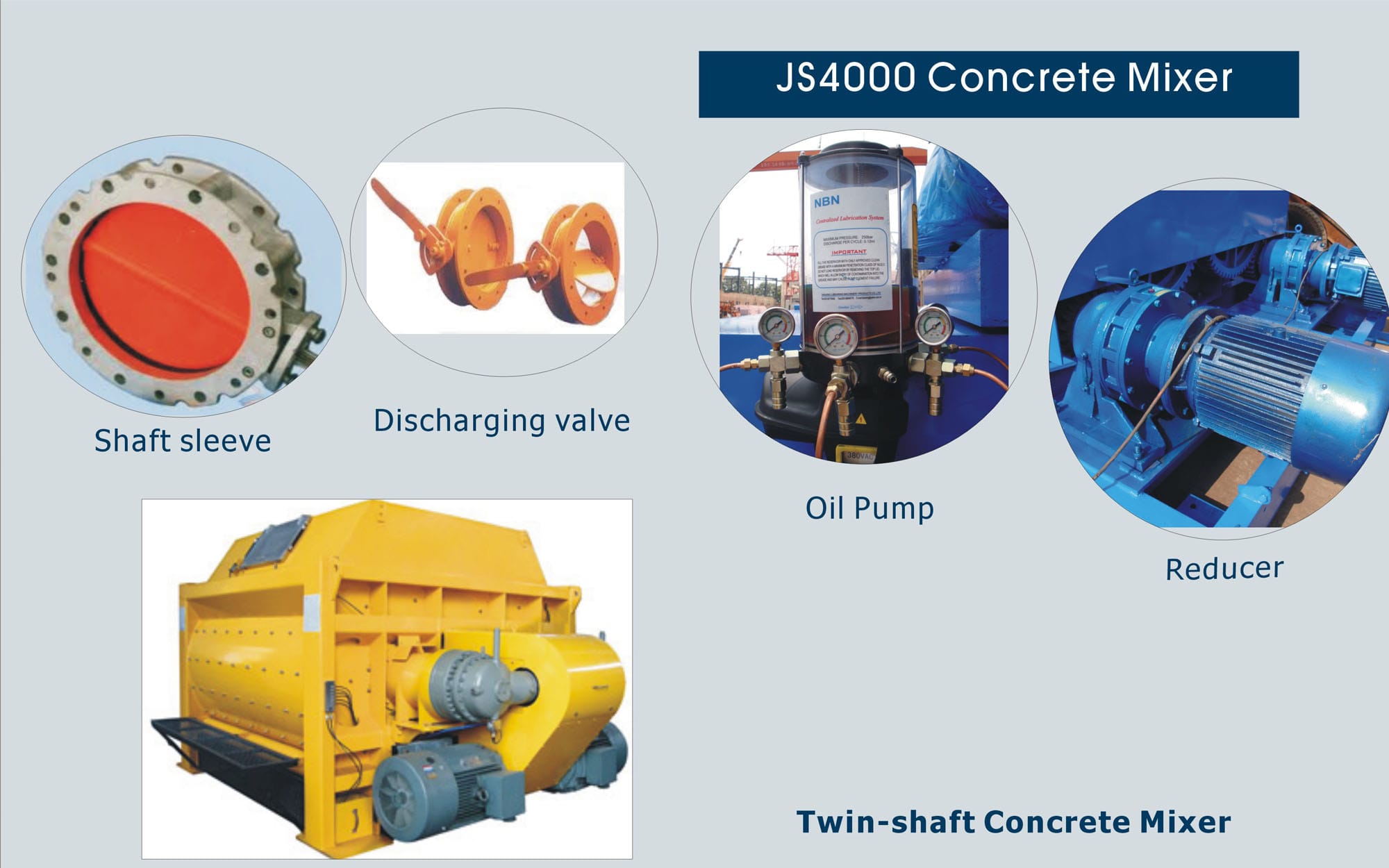
Emergency Diagnostic Overview
In high-volume ready-mix concrete production, a mechanical or hydraulic malfunction within the primary compulsory mixer brings the entire batching plant to an immediate, financially damaging standstill. Among all structural sub-systems, the twin-shaft concrete mixer discharge gate assembly experiences the highest cyclical wear, mechanical impact vectors, and exposure to rapid cement hydration build-up.
A jammed or partially unsealed discharge gate prevents complete batch discharge, ruins mix consistency, triggers severe residual motor overload spikes, and halts localized transit mixers waiting beneath the mixing tower.
This diagnostic blueprint provides field service engineers, automation technicians, and plant managers with clear mechanical tolerances, pneumatic loop checking parameters, and safety protocols to systematically troubleshoot and resolve discharge gate seizure events.
The 4 Primary Root Causes of Discharge Gate Jamming
When a pneumatic or hydraulic discharge gate fails to actuate upon receiving a software signal from the primary PLC automation desk, the failure can be localized into four specific engineering sub-domains.
1. Mechanical Obstruction & Hydrated Concrete Build-up
The most frequent cause of terminal gate seizure is the failure to maintain daily chemical cleanout cycles. Residual concrete slips into the critical mechanical tolerances between the sliding or rotary gate curvature radius and the secondary outer polyurethane sealing strips. Once this slurry cures to a hardness profile exceeding 25 MPa, the dynamic friction coefficient breaches the design limits of the hydraulic ram or pneumatic cylinders, locking the gate frame in place.
2. Pneumatic Loop Pressure Depletion & Valve Stiction
For plants standardizing on pneumatic gate actuation (e.g., dual-acting ISO cylinders running on heavy-duty air loops):
- Operating Pressure Volatility: The system requires a continuous, non-fluctuating supply pressure between 0.6 MPa to 0.8 MPa (6 to 8 bar). If the primary plant air compressor experiences cyclic system drops below 0.5 MPa, the cylinder piston will lock mid-stroke under a full 2-cubic-meter material load.
- Solenoid Valve Stiction: Moisture ingress into the central pneumatic distribution manifold causes internal oxidation of the spool within the 5/2-way dual solenoid control valves. This halts the directional air vector switch despite the 24V DC signal being fired properly by the PLC output cards.
3. Hydraulic Power Pack Cavitation & Valve Failures
On large-scale industrial mixers (2.0 m³ to 4.5 m³ throughput per batch), heavy-duty hydraulic power packs are deployed to override aggregate wedging resistance.
- Fluid Degradation & Cavitation: If the hydraulic fluid viscosity drops or experiences chemical emulsification via moisture ingress, the high-pressure pump cavitates, dropping internal system line pressure below the required 16 MPa (160 bar) actuation threshold.
- Proportional Relief Valve Seizure: Microscopic metallurgic wear debris can clog the internal bypass orifice of the primary hydraulic relief valve, looping fluid straight back to the tank reservoir and dropping cylinder torque outputs to zero.
4. Limit Switch Proximity & Calibration Drift
Often, the gate is physically moving, but the digital automation loop halts production because it fails to receive the definitive "Gate Fully Closed" or "Gate Fully Open" feedback loop signal.
- Proximity Sensor Alignment: Magnetic inductive proximity sensors or heavy-duty mechanical limit switches are subject to severe vibration vectors from the dual 37kW/45kW main mixer motors. A spatial displacement misalignment of just 5 mm pushes the sensor target outside the active electromagnetic inductive sensing zone (typically 2mm to 8mm range), causing the PLC software loop to freeze the next batch sequence.
Technical Specifications & Diagnostic Tolerances Matrix
The table below maps the strict mechanical benchmarks and electronic parameters required to maintain optimal discharge gate actuation.
| Functional Sub-System | Optimal Metric Boundary | Emergency Diagnostic Failure Threshold | Recommended Test Tool / Device |
|---|---|---|---|
| Pneumatic Line Pressure | 0.65 to 0.75 MPa (6.5-7.5 bar) | < 0.50 MPa (Air Starvation) | Analog Glycerin Pressure Gauge |
| Hydraulic System Pressure | 14.0 to 18.0 MPa (140-180 bar) | < 10.0 MPa (Torque Depletion) | Inline High-Pressure Flow Meter |
| Liner to Gate Clearance | 0.5 mm to 1.5 mm spacing | > 4.0 mm (Slurry Leakage / Wedging) | High-Precision Feeler Gauges |
| DC Solenoid Input Voltage | 24.0 V DC (Stable Loop) | < 21.5 V DC (Coil Actuation Dropout) | Digital True-RMS Multimeter |
| Hydraulic Oil Temperature | 35°C to 55°C | > 75°C (Fluid Thinning / Blow-by) | Laser Infrared Thermometer |
Step-by-Step Emergency Emergency Procedures
If a twin-shaft mixer gate jams with a live, un-discharged batch inside the drum during a hot weather pour, engineers must act within a strict 30-minute hydration window to prevent the concrete from curing inside the machine.
[Isolate Power & Tag Out] ──> [Verify Line Pressures] ──> [Execute Manual Override] ──> [Inspect Proximity Alignment]
Step 1: Execute Lockout-Tagout (LOTO) & Isolate Fluid Energy
Before sending a technician beneath the mixing tower discharge chute, isolate the main 380V breaker feeding the mixer motors. Bleed the residual air pressure accumulator or lock out the hydraulic pump motor block. Lock the safety switch keys inside a personal LOTO station to completely mitigate accidental gate closure risks.
Step 2: Test the Mechanical Manual Override Loop
Locate the central directional hydraulic/pneumatic solenoid manifold. Most premium international valves (e.g., Rexroth, Festo, or top-tier Chinese equivalents) feature a mechanical manual override pin or recessed button. Use a 5mm hex wrench to push the manual override pin directly.
- Diagnostic Inference: If the gate actuates smoothly under manual override, the mechanical link, seals, and pneumatic line lines are perfect—the failure is entirely electronic (broken 24V wire line, fried PLC relay card, or blown solenoid coil).
Step 3: Measure Sensor Calibration and Gap Clearances
Check the physical targets on the gate swing arm relative to the inductive proximity switches. Clean off any residual dry cement dust coating the face of the sensors. Use feeler gauges to verify the spatial gap is calibrated within 3 mm. Verify that the internal LED on the proximity sensor changes state (On/Off) when the gate arm moves manually across the path.
Step 4: Rectify Polyurethane Seal Wedging
If the gate is jammed half-open, inspect the circumferential gap. Often, a sharp 40mm basalt aggregate particle wedges tightly between the high-tensile Cr26 liner gate lip and the adjustable polyurethane sealing strips. Loosen the retaining bolts on the exterior adjustable sealing plate, drop the seal pressure back by 2mm to release the jammed aggregate, cycle the gate open to dump the material, and then retighten the seals to factory spec.